
Hernia Surgery
Services Directory
Get In Touch
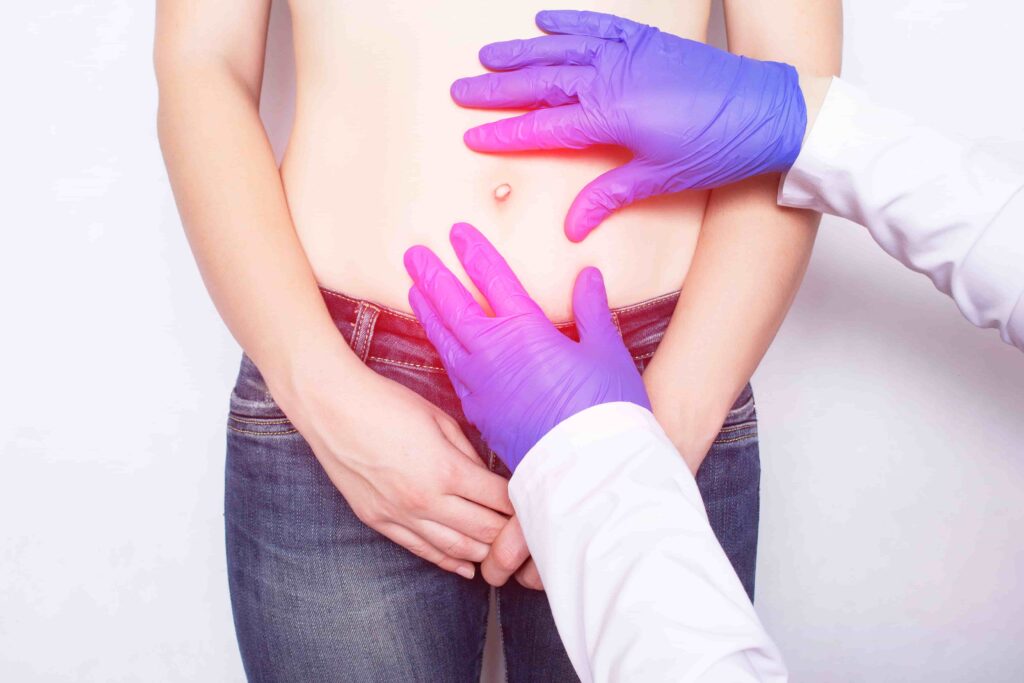
Advance Hernia Treatment & Repair Surgery in Jersey City, NJ
Hernias are quite common, but without surgical treatment, they may lead to pain or other health problems. Dr. Joseph F. Popovich, MD, FACS, a leading general and vascular surgeon in Jersey City, NJ, can remove your hernia using advanced techniques, either laparoscopically or through a traditional open procedure. If you need hernia surgery, call Dr. Popovich’s office for a consultation or book your appointment online.
What is a hernia?
A hernia develops when the inside layer of your muscle tissue weakens, allowing the inner abdominal tissue to push through, creating a type of sac, which may allow the abdominal tissue or a loop of your intestines to push through.
Hernias are common and affect both men and women. They do not go away on their own and may worsen over time. Surgical hernia repair by an experienced Jersey City surgeon is recommended if you have a hernia.
What are the types of hernias?
There are several types of hernias, and most are groin hernias.
Inguinal
An inguinal hernia is a type of groin hernia that occurs when your intestines push through a weakness in your lower abdominal area, affecting what’s called the inguinal canal. An inguinal hernia causes a bulge in the pubic area.
Femoral
A femoral hernia is also a type of groin hernia, but it occurs less often than inguinal hernias. A femoral hernia may cause a bulge in the fold of your groin or upper thigh.
Hiatal
A hiatal hernia is when the stomach pops up through the opening in your diaphragm. This type doesn’t typically cause a lump, but it may cause heartburn or a bad sour taste in your mouth.
Other hernias include umbilical hernia repair, incisional hernia repair, and epigastric hernia repair.
How are hernias repaired?
Dr. Popovich can repair your hernia laparoscopically or through a traditional open surgery.
Laparoscopic hernia repair
During a laparoscopic hernia repair, Dr. Popovich performs the procedure using a laparoscope, which is a surgical camera he inserts in your abdomen through a small incision. He then makes two additional incisions for his surgical tools, which he uses to repair your hernia with a surgical mesh.
Because he uses smaller incisions, recovery after a laparoscopic procedure is usually significantly shorter than an open procedure. But not everyone is a candidate for a laparoscopic hernia repair.
Open hernia repair
During an open hernia repair, Dr. Popovich makes one large incision near the area of your hernia, cutting through skin, fat, and muscle. He then repairs the hernia using a surgical mesh and stitches the incision closed.
Dr. Popovich will determine the best method for repairing your hernia after an examination and review of your medical history.
For safe, effective hernia surgery in Jersey City, contact Dr. Popovich today:
FAQs
1. What is a hernia?
A hernia occurs when tissue or part of an organ pushes through a weak area in the muscle or connective tissue, often causing a visible bulge.
2. Do hernias go away on their own?
No. Hernias do not go away on their own and may become larger or more uncomfortable over time.
3. When is hernia surgery recommended?
Hernia surgery is usually recommended when a hernia causes pain, grows larger, affects daily activities, or creates a risk of complications.
4. What are the common types of hernias?
Common types of hernias include inguinal, femoral, hiatal, umbilical, incisional, and epigastric hernias.
5. What is an inguinal hernia?
An inguinal hernia happens when tissue or intestines push through a weak spot in the lower abdominal wall near the groin, often causing a bulge in the pubic area.
6. What is a femoral hernia?
A femoral hernia is a less common groin hernia that may cause a bulge in the upper thigh or groin fold.
7. What is a hiatal hernia?
A hiatal hernia occurs when part of the stomach pushes through the diaphragm and may cause symptoms such as heartburn or a sour taste in the mouth.
8. What is laparoscopic hernia repair?
Laparoscopic hernia repair is a minimally invasive procedure that uses small incisions, a camera, and surgical tools to repair the hernia, often with mesh.
9. What is open hernia repair?
Open hernia repair is a traditional surgical approach that uses a larger incision near the hernia to repair the weakened area, often with surgical mesh.
10. Is laparoscopic hernia repair better than open surgery?
Laparoscopic hernia repair may offer a shorter recovery and smaller incisions, but the best option depends on the type of hernia, your health history, and your surgeon’s recommendation.
11. Will surgical mesh be used during hernia repair?
In many cases, surgical mesh is used to reinforce the weakened area and help reduce the risk of the hernia coming back.
12. Am I a candidate for laparoscopic hernia repair?
Not everyone is a candidate for laparoscopic hernia repair. Your surgeon will decide the best approach after an exam and review of your medical history.
13. How long does it take to recover from hernia surgery?
Recovery time depends on the type of hernia, the surgical method used, and your overall health, but laparoscopic repair often allows for a quicker recovery than open surgery.
14. What symptoms can a hernia cause?
A hernia may cause a bulge, discomfort, pain, pressure, heartburn, or worsening symptoms during lifting, coughing, or physical activity.
15. How can I schedule a hernia consultation in Jersey City, NJ?
You can schedule a consultation by calling Dr. Popovich’s office or booking an appointment online.